
All About the Apparatus: Pilates Equipment 101
When most people think about Pilates, they picture the mat and maybe the reformer. But did you know there is a wide array of equipment, known as apparatus, that Joseph Pilates invented? He originally designed the apparatuses as a cohesive system that was meant to work together, rather than isolating student work to just a single machine. Here’s an overview of some classic pieces, all of which can be found at Spring Society Pilates.
Mat
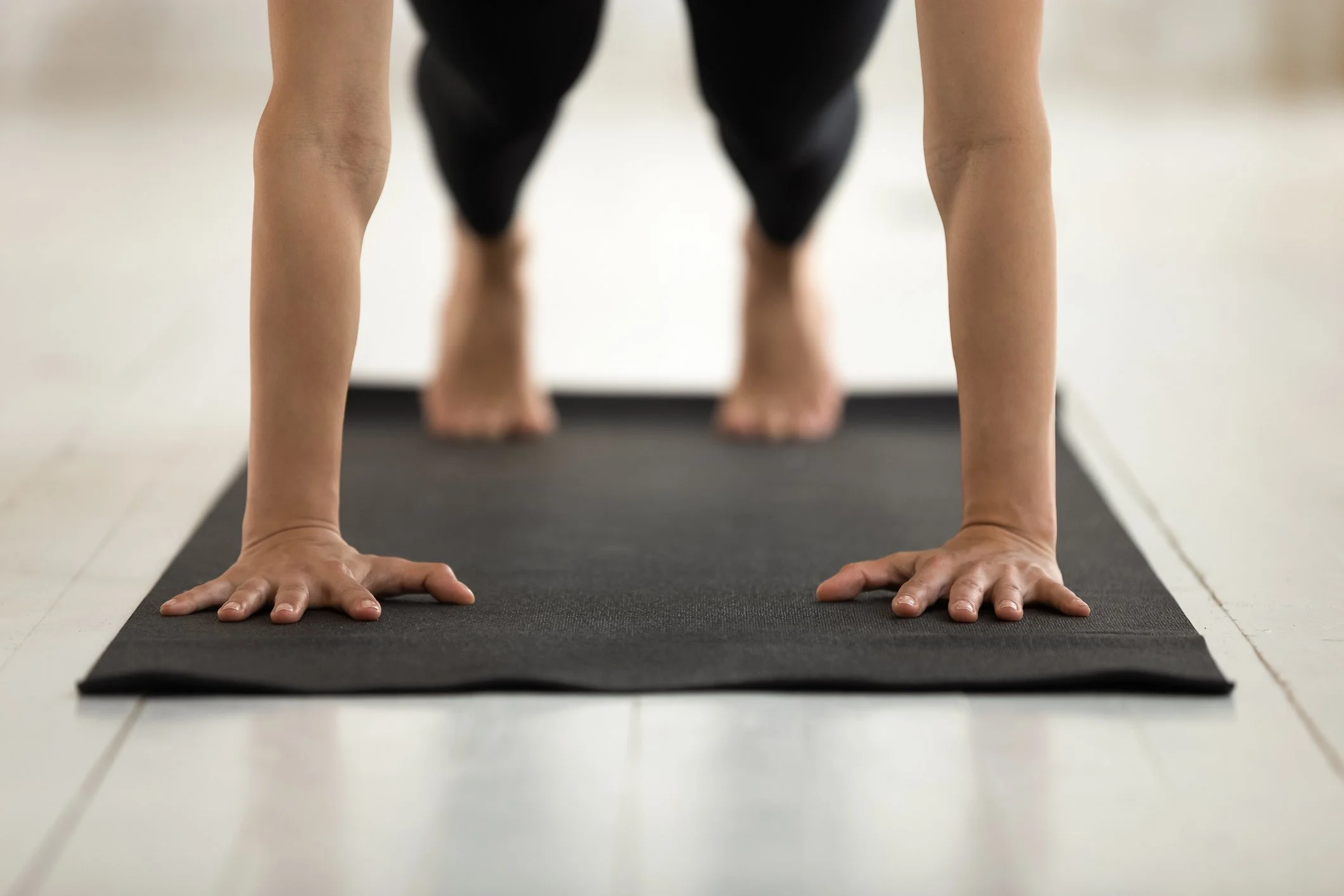
It’s a classic for a reason, but did you know mat Pilates is also considered the hardest form? While not technically considered an apparatus on its own, the mat is the ultimate test of strength and control. Without any form of assistance against the force of gravity, practitioners must find coordination and balance on their own, rather than with the help of springs or straps. While many contemporary mat classes have plenty of modifications and utilize props like balls, bands, and rollers, the original classical mat sequence of 34 moves has no props or modifications, and is always the same order from start to finish.
Reformer
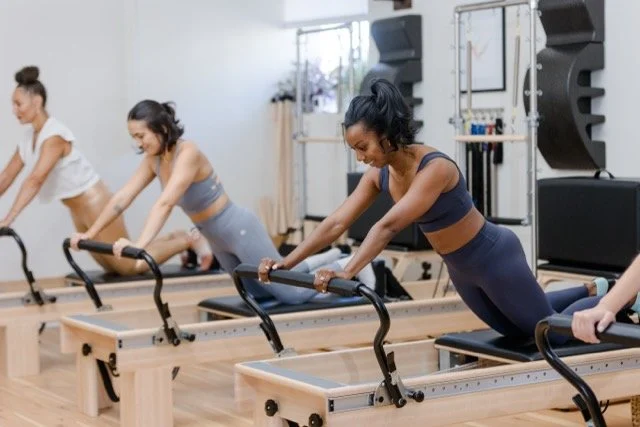
Next to mat, this is what most people think of when they hear Pilates and rightfully so. In the last few years, the number of studios offering reformer Pilates – and its offshoots such as the megaformer and other reformer-like devices – has exploded. The idea of the reformer began when Joseph Pilates was held as a prisoner in an internment camp on the Isle of Man, where he worked as a hospital orderly, during World War I. To help injured and bedridden prisoners regain their strength, he manipulated the bed springs found in mattresses, attaching them to headboards and footboards and creating corresponding exercises. You can see this idea in modern reformers, which contain a sliding carriage (also known as the “bed”) that moves along rails and contains springs, straps, and a footbar. Each spring color is a different resistance so an individual can customize the weight that works for them for a given exercise, whether they are lying down, sitting, kneeling, or standing. The reformer was originally designed to help people find the strength, control, coordination, balance, and flexibility to ultimately progress to the mat practice.
Trapeze Table/Cadillac
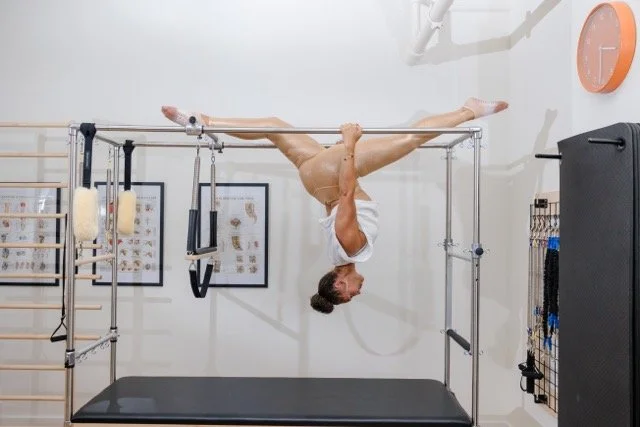
Like the reformer, the trapeze table also relies on spring resistance, with a few key differences. Unlike a reformer, there is no moving bed with the trapeze table. Rather, there is a flat table that provides a more stable surface for movers, making it a great choice for private sessions, particularly in clinical and rehabilitative settings. Additionally, the line of pull of the springs is more vertical than that of a reformer, which is horizontal and parallel to the floor. It’s possible to do similar movements on the reformer and trapeze table but have notably different experiences because the varying force angles cause us to feel those movements differently in our bodies. Lastly, and perhaps most obviously, is the metal box-like frame that encompasses the table. This frame not only allows for varying heights of spring set-up, but provides a unique system – including the trapeze bar, fuzzy hanging loops, and push-through bar – for upper body exercises and hanging work that just can’t be replicated on other apparatuses. Interestingly, the trapeze table got its nickname of “Cadillac” in the 1940s because it was seen as a flashy piece of equipment loaded with features, attachments, and options that the standard reformer bed didn’t have. To this day, you will hear “trapeze table” and “Cadillac” used interchangeably.
Tower
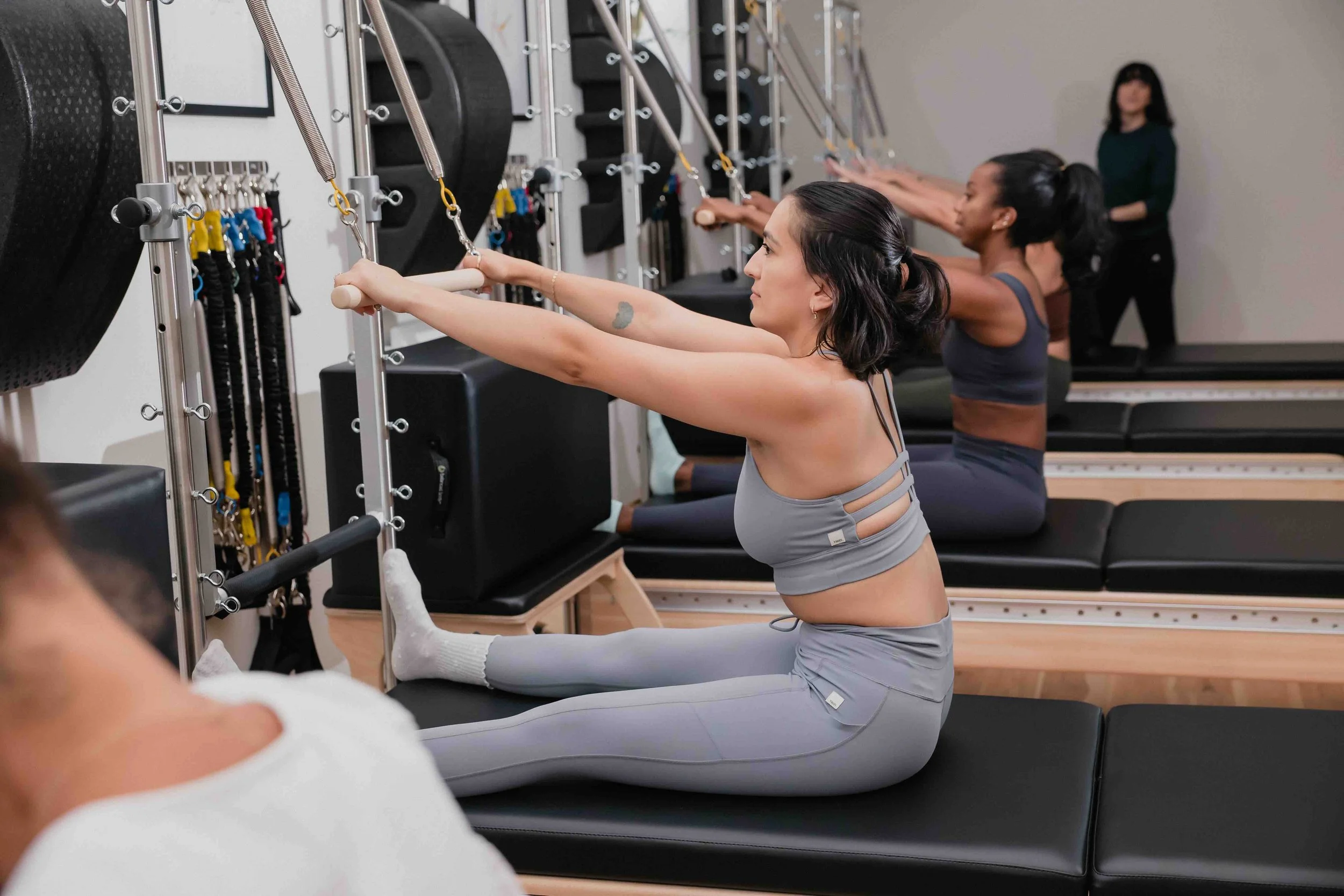
The tower is a direct descendant of the Cadillac and is found more commonly in group or class settings. It allows movers to enjoy features of the Cadillac – such as the push-thru bar, rolldown bar, and adjustable spring heights – but not need that specific apparatus to do so. Some studios have the tower unit attached to the wall with a mat below to get the full benefits of the repertoire. At Spring Society Pilates, we have tower units attached to each reformer, which allow us to effortlessly switch between reformer work or tower and mat work, depending on the class. We also have plenty of different tower spring options so you can find the right amount of resistance at the right angle for your body.
Chair
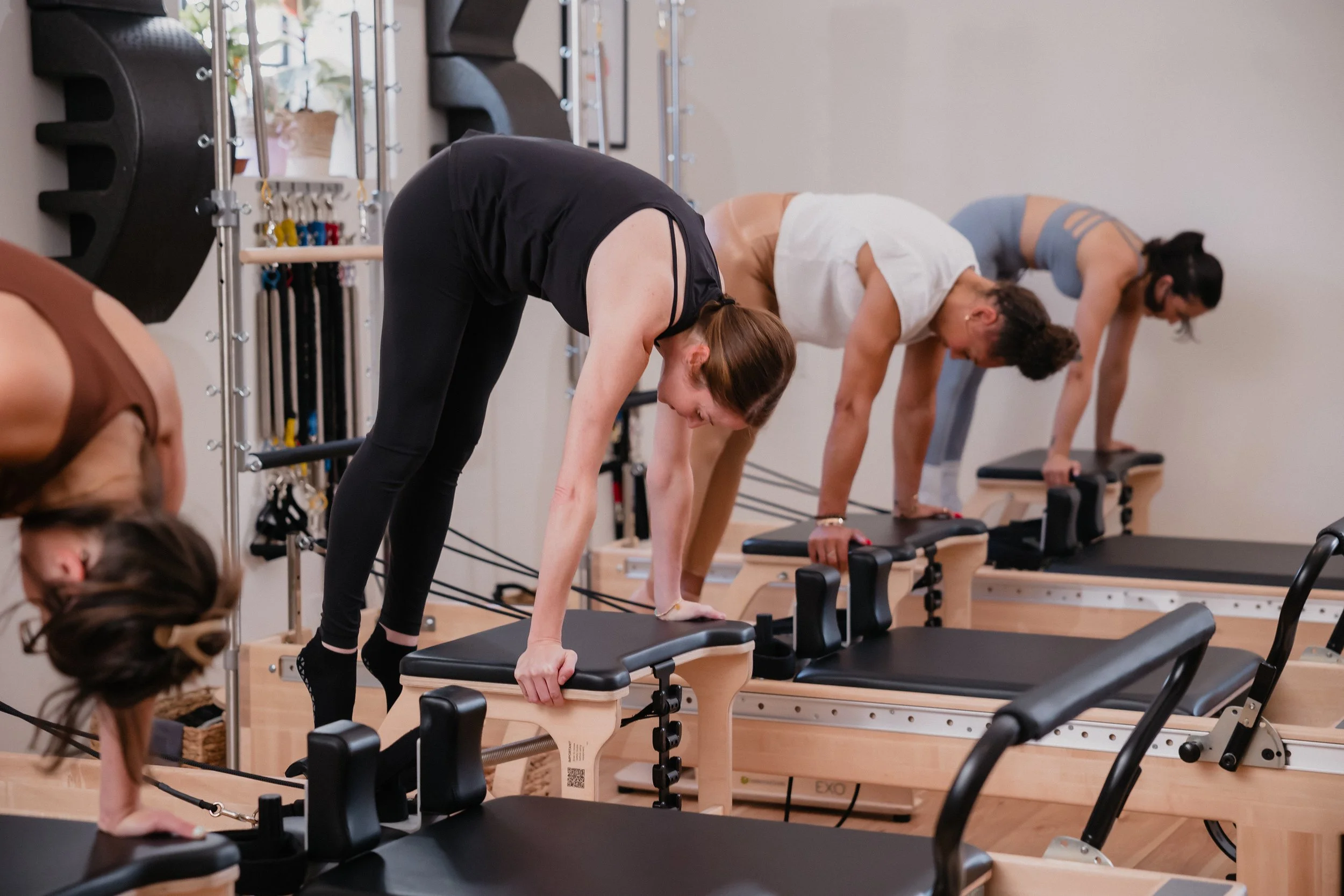
Packing a punch with an incredibly small footprint, the chair features a pedal attached to 2-4 springs (in the studio we use the Exo chair with 2 springs) and utilizes a different spring angle than the reformer. The chair is widely considered to be the most challenging apparatus because of the compact surface area and limited support provided by the springs Joseph Pilates designed the chair because he wanted his clients living in small New York City apartments to do Pilates at home, and very few had the space for a reformer. And even better? When not in use, the traditional Wunda chair can be turned on its side and have cushions added to exist as an actual sitting chair. Movers can do their exercises on the chair before breakfast, and then sit in the same chair to relax and enjoy their morning coffee. How’s that for efficiency? You can see archival footage of Joseph Pilates demonstrating his first Wunda chair design here.
Ladder Barrel
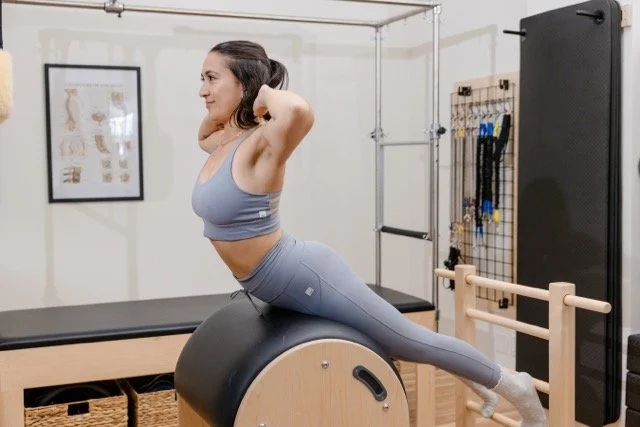
This apparatus is just what it sounds like – part ladder and part barrel! Unlike other apparatuses, the ladder barrel doesn’t feature springs and was not adapted from pieces of furniture; instead, it relies solely on body weight and gravity. In our opinion, this is the best apparatus to facilitate spinal movements including flexion, articulation, extension, and lateral flexion (side bending). The curve of the barrel gives movers a supportive reference point when bending the spine in all directions that is unmatched. The barrel can be adjusted to be closer to or further from the barrel depending on a person’s height.
Foot Corrector
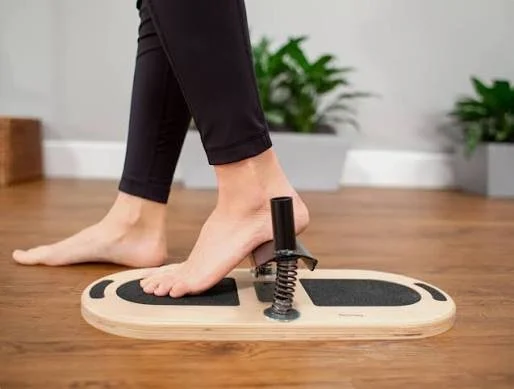
The smallest of the Pilates apparatuses, the foot corrector delivers a big impact in a little package. It’s also one of the least known apparatuses, but don’t let that fool you; it’s one of the most powerful pieces in the whole system. Resembling a traditional shoe-measuring device, it consists of a solid wooden base and a spring-loaded pedal that is shaped to match the natural contour of the arch of the foot. Benefits include intrinsic foot strengthening, arch support and restoration, increased ankle mobility, improved alignment and foot symmetry, and better balance and proprioception.
CoreAlign
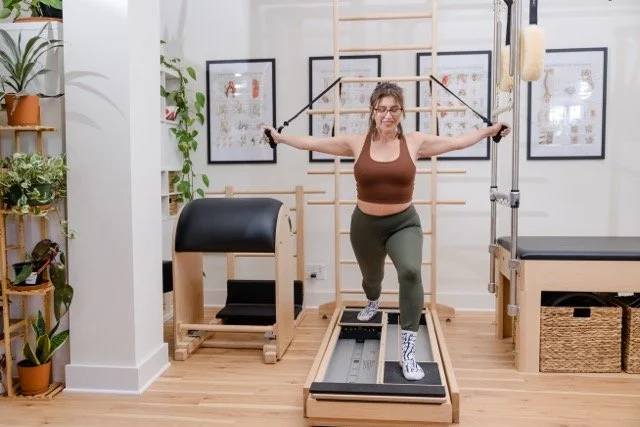
Another piece of equipment worth mentioning is the CoreAlign. While it’s not a traditional Pilates apparatus, it is found in many Pilates studios and is an incredibly effective tool for rehabilitation and functional movement, particularly in improving posture, gait, and balance. It is also used in athlete training to increase strength, power, and endurance. The base includes two tracks and two independently moving carts (unlike a reformer, which has one track and one carriage). Each cart can be loaded with resistance from the front or back of the machine, which opens up a world of fun and diverse exercise possibilities.
As you can see, there’s no shortage of fun ways to move and evolve your Pilates practice on various apparatuses. Be sure to check out our next post all about props, including the magic circle, foam rollers, balls, bands, and more!