
How to Find the Right Pilates Studio for You
10 Key Questions to Help You Discover Your Happy Place
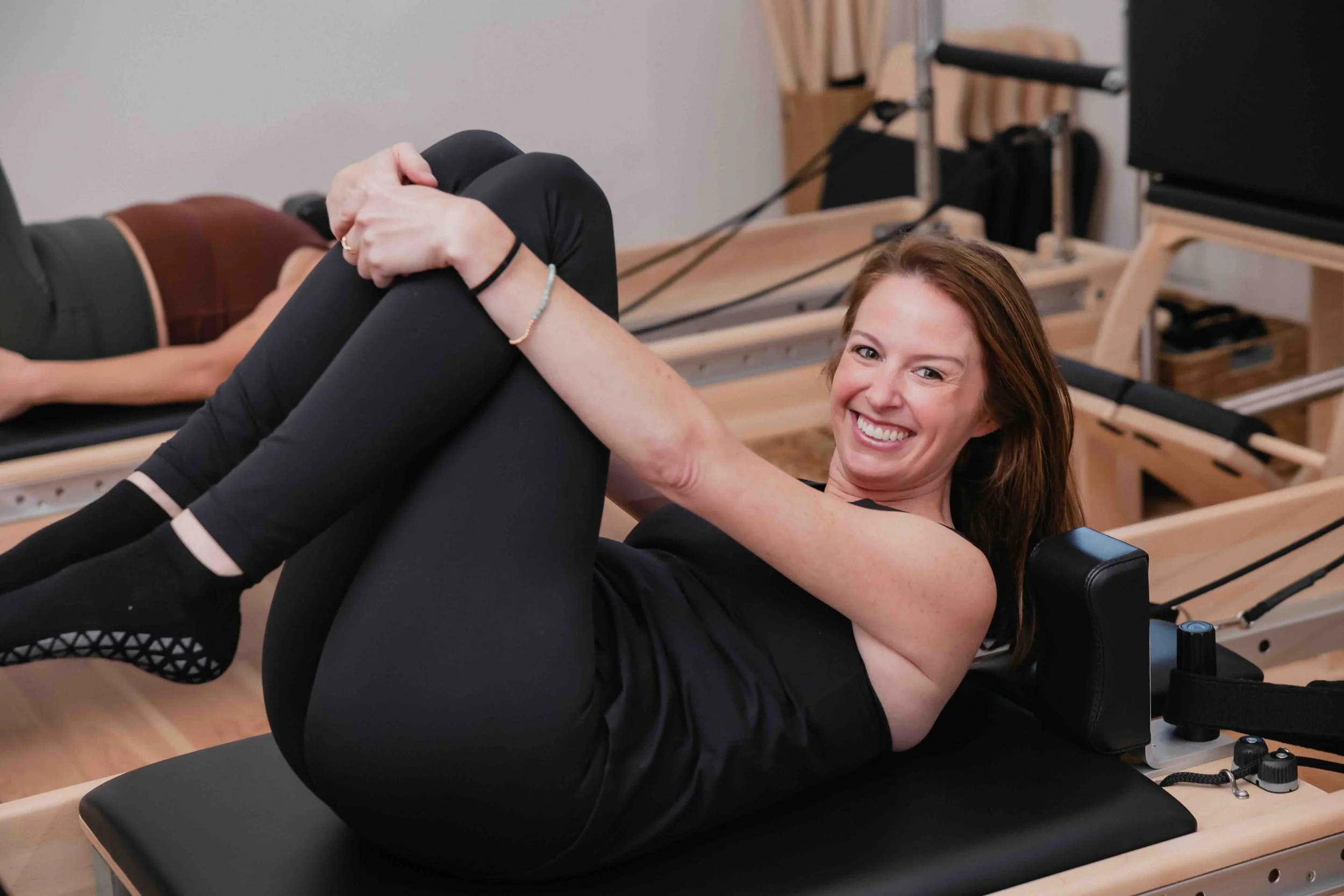
While Joseph Pilates invented his method over a century ago, the practice is undoubtedly having a moment. According to recent data from the Sports & Fitness Industry Association (SFIA), the number of Pilates participants has grown nearly 40% to 13.8 million over the last six years. As a result, it seems like new studios are popping up every day. Folks looking to get stronger, leaner, and more flexible have never had more options – or felt more overwhelmed on where or how to start.
So how does a newbie find the right Pilates studio for them? There’s no single right answer and the choice should consider multiple factors. But if you’re just starting out, I recommend asking yourself 10 key questions to help narrow down the sea of possibilities:
Does the studio practice Classical or contemporary Pilates? Both are great, but it’s important to know the difference. Classical Pilates is taught exactly as Joseph Pilates himself taught it – in the same order of exercises each session, with traditional equipment built to his exact design specifications. Additionally, true Classical Pilates teachers should have a direct documented educational lineage to Joseph Pilates himself. One advantage of Classical Pilates is you get to know the exercises really well, and have a benchmark to compare your progress from one session to the next. Like anything, repetition is key to mastery, and the more you do the same movement, the better you get at it.
Contemporary Pilates can utilize traditional movements, but often places them in a different order than the Classical sequence depending on class goals, themes, or overall flow. Additionally, contemporary Pilates apparatus are updated with modern padding, adjustable springs with different tensions (unlike Classical springs that have a single tension), and supplemented with props like balls and bands. Because contemporary Pilates studios generally offer various class levels, it’s an especially good way for beginners and those seeking rehabilitative exercise, recovering from injury, or managing a special condition to move in a safe environment. Very often the Classical method just isn’t doable for certain groups, so contemporary modifications can make Pilates more accessible for all bodies.
Spring Society Pilates is a contemporary Pilates studio (although we do offer Classical mat repertoire) with different class types and levels. One of our core values is inclusion, so we want to provide exercises that are accessible to anyone who walks through the door.What is the training and movement background of the instructor? This is one of the most important questions you need to ask. The gold standard of Pilates teacher qualifications is a 500-hour (minimum) comprehensive teacher training program (meaning a teacher is trained on all the apparatus, not just mat and reformer), and possessing a National Certified Pilates Teacher (NCPT) credential from the National Pilates Certification Program (NPCP). And that’s just the beginning. After passing the NCPT exam, the instructor is required to complete a certain number of continuing education units per renewal period to keep their credentials current. What courses have the instructors recently taken and how are they putting that knowledge into practice?
I am a NCPT and have completed a 650-hour certification program through Body Harmonics, a 500-hour Diploma of Clinical Pilates focusing on movement rehabilitation and therapeutic exercise through Breathe Education, and hundreds of hours of continuing education. I’m also CPR/AED-certified.
It’s also helpful to understand the instructor’s background with movement. Were they a former collegiate athlete? A dancer? Maybe someone who was struggling with a health condition and Pilates is finally what cured it? There’s no right or wrong answer. You might connect more with a teacher with similar movement and life experiences. My own background is in competitive soccer, so I have a unique lens into what it’s like to be and work with an athlete. And while I was never a dancer, I also enjoy learning from teachers with a dance background who bring a different perspective.Does the studio or instructor specialize in working with a particular type of client? Certified Pilates teachers are qualified to work with all types of clients, but some teachers may specialize or enjoy working with certain populations more than others. If you have a particular condition, ask the studio about their experience in working with folks with similar conditions as yours. Some examples include pre- and post-natal, scoliosis, hip and knee replacements, arthritis, stenosis, sciatica, osteopenia, and osteoporosis, just to name a few.
What is the teaching style? What is the instructor’s demeanor like? Every instructor has a different style, but ideally there is some consistency within a given studio. For instance, are instructors warm in their interactions or more strict? Do they favor hands-on cueing, or are they more verbal? Do they cue in words that you understand, or in technical anatomical terms that may (or may not) be confusing? Is class slow-paced with lots of pauses and transitions, or fast-paced with minimal down time? Do they encourage you to ask questions, or trust you to figure it out yourself? Do they allow you to make mistakes without fear of embarrassment, or call you out for doing something incorrectly? It’s important to check in with yourself to see if you have a positive or negative reaction to a particular style, and take that into consideration as you decide on a permanent Pilates studio. I’d recommend completing a few sessions before coming to a conclusion. Just like all new relationships, it can take time to build rapport, and you might not get it instantly. But if it does come naturally, that’s a very good sign!
How does the studio environment make you feel? This one is less about the actual teaching style and more about the overall environment and vibe. Do you feel the environment is inclusive and you can come as you are, or do you get a sense that the studio is designed for a very specific type of person? What is the ambiance like? Does the studio have natural light with subtle and calming (if any) music, or is it dark with neon lights, loud electronic dance music, and a mic’d up instructor to give a club-like feel? Can you hear what the instructor is saying? Is the environment detracting from the movement experience, or enhancing it? Are folks there to take care of their bodies, or are they there primarily for selfies? Trust your gut on this one.
What brand of equipment is being used, and is it routinely maintained? I love a good bargain, but you don’t want to cut corners or pinch pennies on Pilates equipment. Given you are trusting those machines to hold your body weight and work properly for a sustained period of time, it’s essential to go with a trusted name brand. For contemporary Pilates machines, Balanced Body is a gold standard and what we use at Spring Society Pilates. Merrithew is also an excellent contemporary choice. For Classical Pilates machines, Gratz and Peak Pilates are trusted industry names. Be sure to research the equipment of the particular studio that you are interested in. You don’t want a studio that is getting its reformers from Temu.
Unfortunately, you’d be shocked at how infrequently some studios maintain their machines. Anything with moving parts needs routine maintenance. Just as you get your car serviced every 10,000 miles, you should do the equivalent with your machines. Does the studio routinely check the wear and tear of the springs and the glide of the wheels on the reformer carriage? Do they wipe down the rails and remove dirt, grime, and hair from those hard-to-reach places? Maintenance is critical both for client safety and proper machine function. At Spring Society Pilates, we keep regular maintenance logs so we have a record of what has been done and when, and so we can know when certain components will need to be replaced.Is the studio location accessible to you? This one seems obvious, but speaking as someone who often makes ambitious plans that don’t come to fruition, it’s worth mentioning. When locations are more accessible, you’re more likely to go. You might find the best studio ever and tell yourself you’ll find a way to get there, but it’s just not convenient to your daily routine. Are you really willing to get up 30-60 minutes earlier to trek to the studio you love? It might work the first week or two, but it might get old real quick. Or if you are willing to go a little bit out of the way, are there class or appointment times that make the trip easier and allow you to avoid rush hour? It’s certainly a factor to consider before choosing where to make a long-term commitment.
What are the studio’s offerings, and how do they line up with your schedule? Over my teaching career, I’ve taught at just about every time of day. For some clients, the only time they can get their practice in is before work, so those 6am and 7am slots are critical. If that describes you, then you probably don’t want to commit to a studio with availability only from 10am-3pm. Are you a retiree who can sleep in and enjoys a 10am class? Great! (And congrats, that sounds lovely.) You don’t necessarily need a studio that offers a 6am slot. Are you a weekend warrior? Be sure to confirm the studio actually has offerings on weekends; many small boutiques only offer Monday through Friday, so that will be essential to know before committing. Along the same lines, are you looking for classes, privates, or both? Are all the classes the same level, or does the studio offer beginner, intermediate, and advanced? If the studio doesn’t have options that work with your body’s needs or schedule, that’s a sign to start looking elsewhere.
Is the studio owned by a person or a corporation? Is the owner a teacher themselves? Over the last several years, corporations and private equity firms have made heavy investments in the Pilates space, purchasing existing studios en masse and opening new ones as quickly as possible. While that doesn’t have to mean a deterioration of the client experience, it has eventually proven true in all the scenarios I’ve witnessed.
Understandably, any business needs to turn a profit. However, depending on the studio and its business model, there are multiple ways to achieve this. Large chain studios typically maximize revenue by packing as many clients into a room as possible and using third parties to attract last-minute discounted bookings, and minimize expenses by postponing equipment maintenance and keeping staff pay stagnant. It’s not uncommon for these chains to have absentee owners or corporate management from afar. This strategy often leads to negative downstream effects such as large class sizes, habitually late clients who disrupt class, deteriorating machines, teacher turnover, and clients who feel like just a number.
By contrast, smaller boutique studios are often owned and managed by individual teachers who are actively involved in the business on a daily basis. When teachers choose to open a studio of their own, it’s because they have a passion for Pilates and helping others move and feel better in their bodies. While profit is certainly still important, you likely won’t find independent studio owners sacrificing the quality of their product or degrading the client experience to achieve it. The independent studio owner’s why permeates through everything they do: not only the teaching itself, but also the studio management, client relationships, and community building.What’s your budget? Last but certainly not least is the budget consideration. This is a real factor and it’s important to get clear on your priorities and what tradeoffs you are (or aren’t) willing to make. Is it worth going fewer times per week to a more qualified instructor with a smaller class environment, or do you prefer more times per week with a larger class environment and a less experienced instructor? You will generally pay more per class for the former and less per class for the latter. If you choose to go fewer times per week for the higher quality experience but still need to move more throughout the week, can you supplement your studio practice with sessions or exercises at home? What works for one person might not work for another, and what works for us in one season of life may not work in another.
At the end of the day, you should feel informed and empowered to find the setup that allows you to move well, move often, and move with joy and without pain.
Any other questions on your mind to ask studios that we didn’t include here? Comment below!